ServicesBamboo Removal
Bamboo Removal in Lake Mary
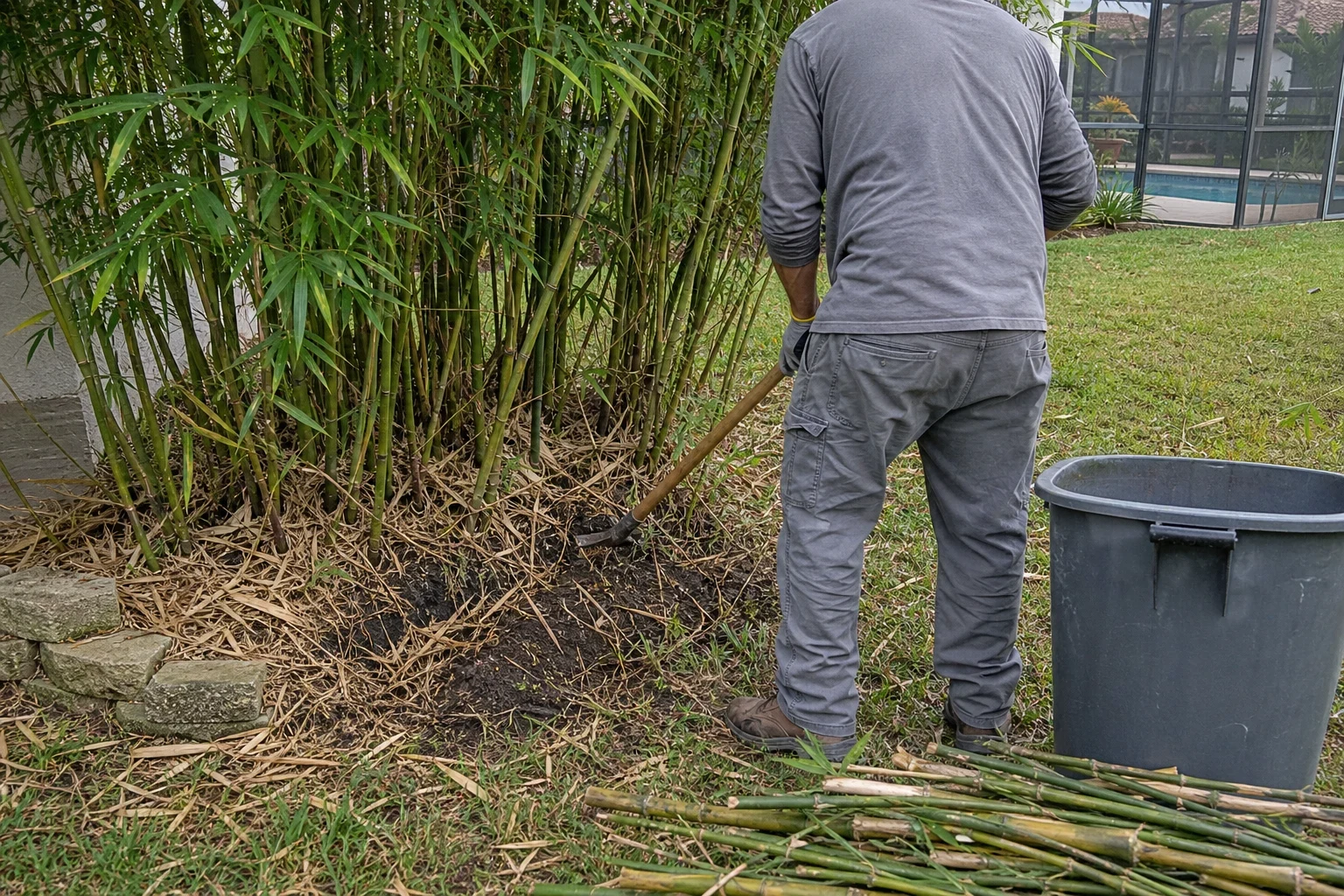
Cutting bamboo to the ground does not get rid of it. The roots keep running and send up new canes within weeks. We take out the canes and the rhizome mat under them, haul everything off and leave you soil you can plant again.
Getting Bamboo Out for Good
Most bamboo in yards around here is a running type. It spreads through underground stems called rhizomes, usually in the top foot of soil. Those rhizomes push under fences, into beds and toward the neighbor's lawn. If you only cut the canes, the rhizomes are still alive and they will fill back in.
So we dig. We cut the stand down, then break up and pull out the root mass with hand tools and machines, depending on how much room we have. Clumping bamboo stays tighter, but its root ball is dense and heavy, and it takes real work to lift.
Timing helps. Bamboo puts up its biggest flush of new shoots in late spring and keeps going through the summer rains. Getting it out in the cooler, drier months means you are not fighting a fresh crop of shoots while the work is going on.
What the Job Includes
Cutting and clearing the canes
We cut every cane at the base and stack them for haul-off. Big culms can be 2 to 4 inches thick, so we cut them into manageable lengths on site.
Digging out the rhizome mat
This is the part that matters. We loosen the soil, follow the rhizomes out to where they end and pull them, not just the main clump.
Grinding heavy root balls
Old clumping stands can leave a root crown like a stump. When digging is not enough, we grind it down, the same way we handle tree stumps in our stump grinding work.
Hauling off all debris
Canes, roots and spoil leave with us. Bamboo can resprout from rhizome pieces, so we do not leave piles on your property.
Grading the area
We backfill the holes and rake the soil level so it is ready for sod, mulch or new plants.
Regrowth check
A few stray shoots can show up after removal from bits we could not reach. We tell you what to look for and how to knock them back.
Signs It Is Time to Remove Your Bamboo
Shoots coming up in the lawn
New canes poking through grass several feet from the stand mean the rhizomes have already moved. Every season you wait, the dig gets bigger.
It is crowding a fence or wall
Running bamboo pushes under and against fences, pavers and slabs. It can lift edging and crack thin concrete over time.
The stand has gone dead inside
Older stands fill with dry, dead canes in the middle. That is a mess to look at and it can hold pests and debris.
It is in the irrigation lines
Dense roots wrap around sprinkler pipes and heads. If a zone near the bamboo has lost pressure, roots may be the reason.
You want the space back
Sometimes it is simple. You want a lawn, a patio or a planting bed where the bamboo is, and it is not going to move on its own.
How a Removal Day Goes
- 1
Walkthrough and estimate
We come out, look at the stand, check which type it is and see how far the rhizomes have run. You get a clear written estimate before any work is scheduled.
- 2
Marking what to protect
We flag sprinkler heads, lines and anything else nearby that we need to work around. We go over access with you, including gates and where the truck parks.
- 3
Cut, dig and pull
The crew cuts the canes, then digs out the root mass and chases rhizomes to their ends. This is the longest part of the day.
- 4
Haul-off and grading
We load out all the debris, fill the holes and level the ground. You walk the area with us before we leave.
- 5
What comes next
If you want the spot turned into lawn or a bed, we can quote sod installation or mulch and beds work for the same area.
What Moves the Price
Bamboo jobs vary a lot. A small clump by the patio and a stand that has run across a back fence line are very different amounts of work. We price after we see it, and the estimate lists what we will do.
- Size and age of the stand
- More canes and a wider area mean more cutting, more digging and more to haul. Older stands have thicker, deeper root mats.
- Running or clumping
- Running bamboo means chasing rhizomes out past the visible stand. Clumping bamboo stays put but the root ball can need grinding.
- Access and what is nearby
- Tight side yards, fences, slabs and irrigation lines mean more hand digging and slower work. Open ground lets us use machines.
- Debris volume
- Bamboo is bulky. The amount of canes and roots we haul away is a real part of the cost.
- Restoring the ground
- Grading is included. New sod, mulch or plants afterward are quoted separately so you can decide.
Bamboo Removal Questions
Something not covered here? (407) 753-9381
Will the bamboo come back?
If the rhizomes are left in the ground, yes. That is why we dig them out instead of just cutting. A few small shoots can still pop up from pieces we could not reach, and pulling or cutting those early keeps them from getting started again.
Can I just cut it down and mow over it?
You can slow it down that way, but it takes steady mowing for a long time, and the rhizomes keep spreading under the soil. Digging out the root mass is faster and more certain.
What is the best time of year to remove bamboo?
The cooler, drier months work well. Bamboo puts up a lot of new shoots in late spring and through the summer rains, so getting it out before then means less regrowth to deal with.
The bamboo is coming from my neighbor's yard. Can you help?
We can remove what is on your side and dig out the rhizomes coming across. Without work on their side too, it may keep pushing over, so we will explain your options when we walk the property.
Will you damage my sprinklers?
We mark heads and lines before we dig and work around them by hand where they run close. Roots are sometimes wrapped tight around old pipe, and if a line needs repair we tell you and can handle it through our irrigation work.
Is financing available for a bigger job?
Yes. We offer financing up to $100,000 on 2–12-year terms, with no prepayment penalties. That can help if you are pairing removal with new sod or landscape design for the space.
Get That Bamboo Out Before It Spreads Again
We will come look at the stand, show you how far the roots have run and give you a free estimate. Then you decide.