ServicesHardscape Installation
Hardscape Installation in Lake Mary
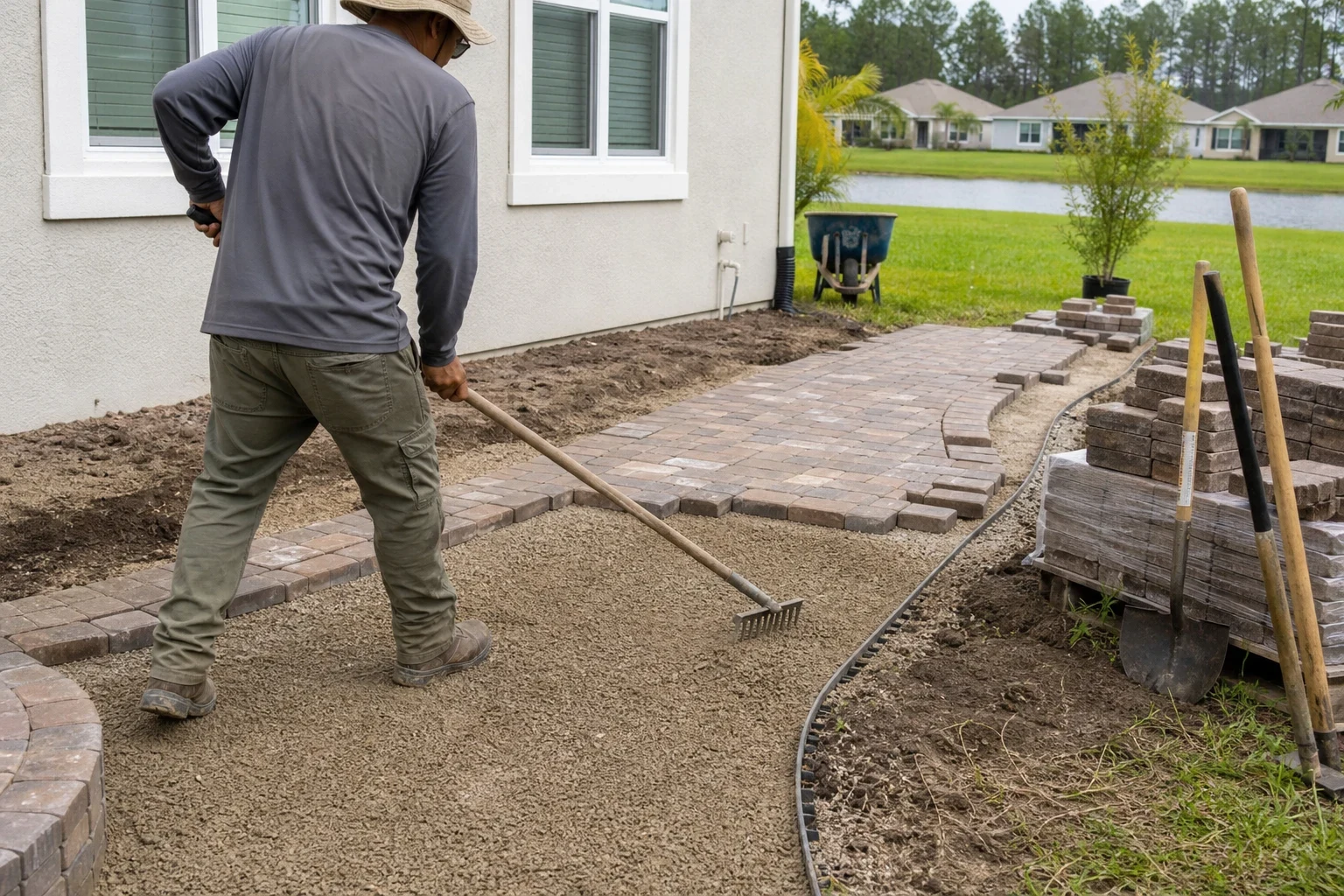
We build paver patios, walkways, fire pit areas and low retaining walls that stay flat and drain right. The work starts below the surface, with a dug-out, compacted base and a slope that moves water off and away from your home.
What hardscape is and when it makes sense
Hardscape is the built part of your yard. Patios, paths, steps, edging, seat walls and fire pits. It is the stuff you walk on and sit on, and it should not move.
Most paver jobs that fail were never built wrong on top. They fail underneath. Sandy soil gets soft when it is soaked, and a thin base lets pavers sink, rock and pull apart. We dig deep enough, lay crushed base in layers and compact each one before a single paver goes down.
Timing matters too. We like to build in the drier months so the base sets up before summer storms start. A patio finished in spring is ready to handle afternoon downpours from day one, and you get to use it all year.
What the work includes
- Paver patios
- Concrete pavers or travertine, laid in the pattern you pick. We set the pitch so rain runs off toward the yard, not back toward the slab of your home.
- Walkways and steps
- Paths from the driveway to the front door, side yard runs to the gate, and steps where the grade changes. Wide enough to walk two across if you want it.
- Fire pit and seating areas
- A pad sized for chairs plus a fire pit ring, with a seat wall if there is room. We leave clearance from roof lines, trees and fences.
- Low retaining walls
- Segmental block walls to hold a planting bed or level a slope. We put gravel and drain pipe behind them so water does not build up and push the wall over.
- Edge restraint and joint sand
- Every paver field gets a buried edge so the outer rows do not creep. Joints get polymeric sand, which hardens and helps keep weeds and ants out.
- Cleanup
- Spoil hauled off, cuts swept up, and the work area raked out. Any lawn or bed we cross gets put back. If you want new plants or sod around the finished space, our landscape design and sod installation crews can handle that.
Signs it is time for new hardscape
Pavers are sinking or rocking
Low spots and loose pavers mean the base underneath has washed out or was never thick enough. Re-leveling on top only buys a few months.
Water sits on the patio
Puddles after a storm point to a patio pitched wrong or settled flat. Standing water by the house is worth fixing before the rainy season.
A worn path through the grass
If everyone cuts the same line across the lawn, that line wants to be a walkway. Grass will not win that fight.
A slope that keeps washing out
Mulch and soil sliding onto the sidewalk after every storm is a good sign a low wall would hold things in place.
A cracked concrete slab
Old slabs crack and heave with roots and moving soil. We can tear one out and replace it with pavers, which flex and are easy to repair one piece at a time.
What moves the price
Every hardscape job is priced from the walkthrough, not from a chart. Two patios the same size can cost very different amounts depending on what is under them and how we get to them. Your estimate shows each line so you can see where the money goes. We also offer financing up to $100,000 on 2–12-year terms, with no prepayment penalties.
Size and shape
Square footage drives material and labor. Curves and lots of corners mean more cuts and more waste.
Material choice
Standard concrete pavers, larger slab styles and travertine all price differently. Block for walls varies by style and height.
Tear-out and prep
Removing an old slab, roots or a failed patio adds time and hauling. Soft or low ground may need extra base.
Access
If equipment can roll into the backyard, the job goes faster. A narrow side gate means more hand work.
Extras
Steps, seat walls, fire pits, drain pipe and moving sprinkler heads each add to the total.
How a hardscape job runs
- 1
Walkthrough and plan
We walk the yard with you, measure, check how water moves and look for sprinkler lines, roots and utilities. You get a written estimate with each part listed. If your neighborhood has an HOA, we hand you a drawing and material list for their review.
- 2
Layout and dig
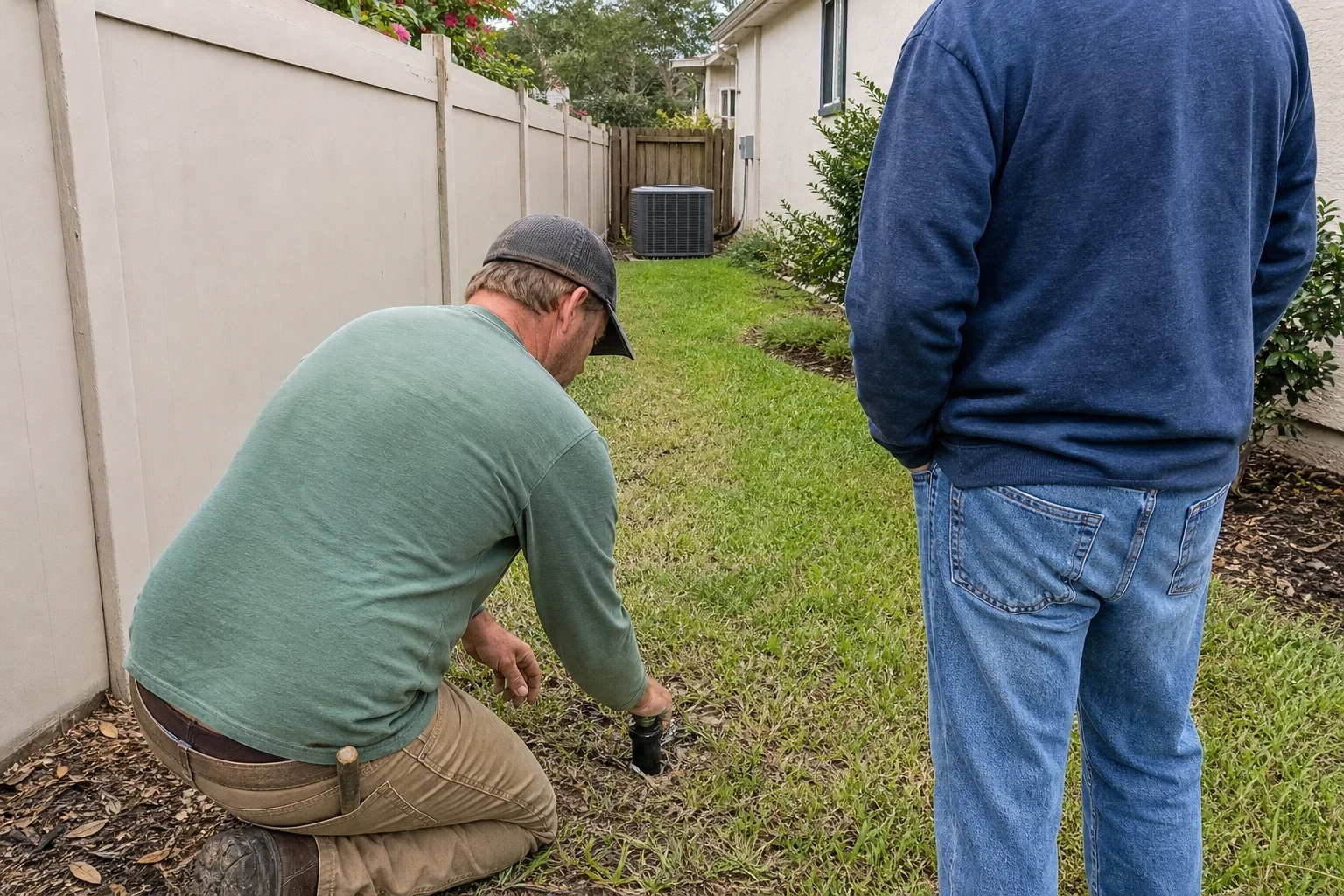
Utilities get marked before we dig. We paint the outline, then excavate to the right depth for foot traffic or a vehicle. Irrigation heads in the way get capped or moved.
- 3
Base and compaction
Crushed base goes in a few inches at a time, and we run a plate compactor over every layer. Then a thin bed of screeded sand, set to the final slope.
- 4
Lay, cut and lock
Pavers go down, edges get cut clean, and the restraint is staked in. We compact the field, sweep in polymeric sand and mist it so it sets.
- 5
Final walk
We walk it with you, hose it down so you can see the water run off, and clean up. Most patios take a few days once the material is on site.
Hardscape questions we hear
Pavers or poured concrete, which is better here?
For most patios we lean toward pavers. They flex with the soil instead of cracking, and if one settles or a root lifts it, we pull a few up and reset them. Concrete costs less up front in some cases, but a crack in a slab is there for good.
Do I need a permit or HOA approval?
A ground-level patio often does not need a building permit, but some walls and structures can, so we check before we start. HOA approval is a separate step, and many neighborhoods require it. We give you the drawing and material details your HOA will want to see.
When is the best time to build?
The drier months are easiest. The base compacts well, the polymeric sand cures without getting washed out, and you have the patio ready before the summer storms. We can build in summer too, we just plan around the afternoon rain.
Will weeds grow between the pavers?
Polymeric sand cuts way down on weeds and ants, but it is not magic. Seeds can blow in and sprout in the top of a joint. A quick pull or a fresh sweep of sand every few years keeps it tight.
Will the work mess up my sprinklers or lawn?
We find sprinkler lines during the walkthrough and cap or reroute them before digging. Lawn we drive over gets repaired at the end. If you want the system adjusted to water around the new patio, our irrigation work covers that.
Get your patio built before the rains
We will come out, walk the yard with you and talk through what fits. You get a written, free estimate by phone after the visit.