ServicesMulch and Beds
Mulch and Bed Service in Lake Mary
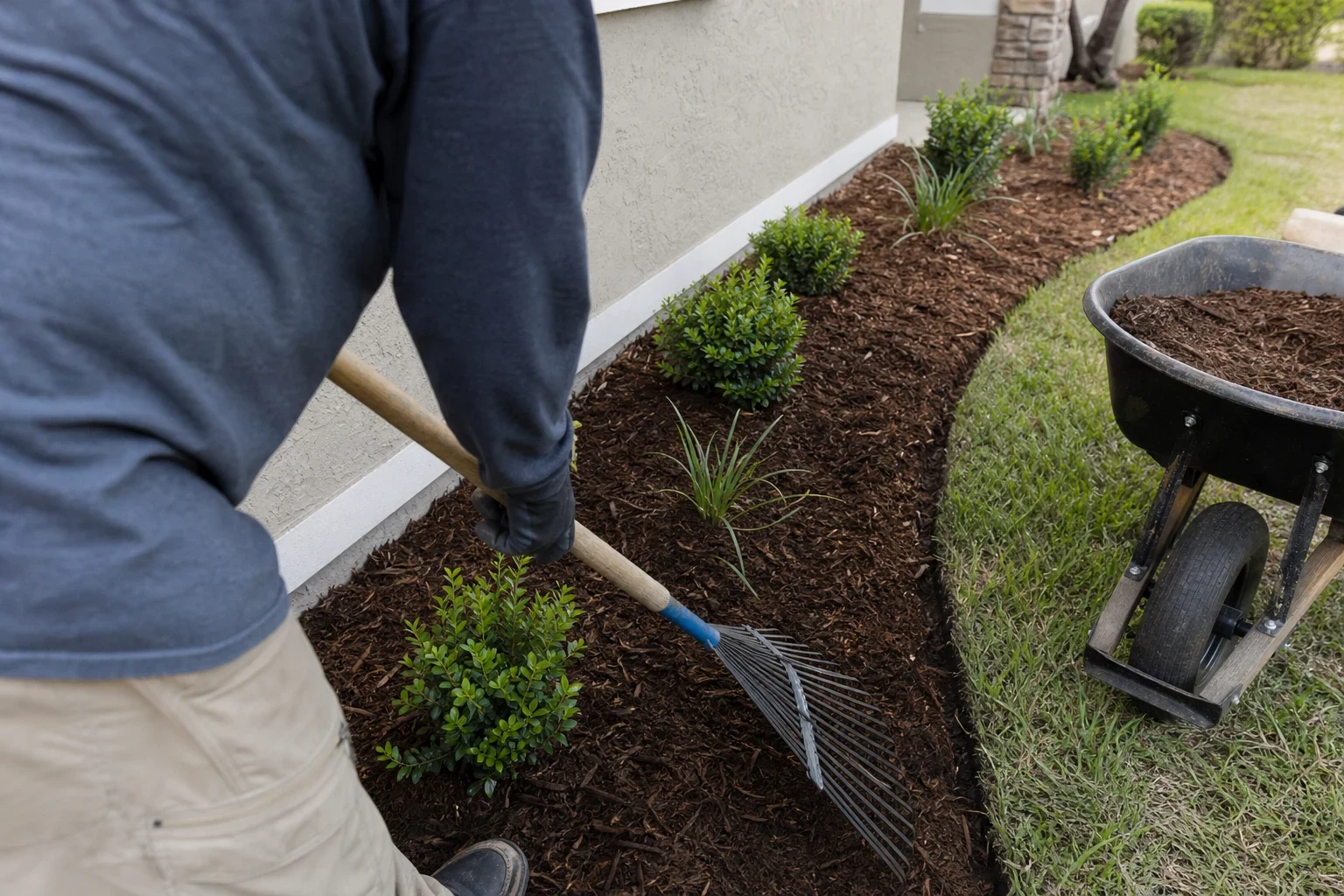
We clear out weeds, recut bed edges and put down fresh mulch or pine straw at the right depth. Your plants keep more water, weeds slow down, and the beds look finished. We time the work so it holds up through the season coming next.
What Good Bed Work Does for Your Yard
Mulch is not just for looks. A two to three inch layer keeps the sun off the soil, holds moisture in sandy ground that drains fast, and shades out a lot of weed seed before it sprouts. Too thin and it does almost nothing. Too thick and roots stay wet and shallow.
Timing matters as much as the material. We like to refresh beds in late winter or early spring, before the dry, hot stretch of April and May dries everything out. A second look in early fall helps after summer storms have thinned and scattered the old layer.
If your beds need new plants or a new shape, that is landscape design. If they just need to be cleaned up and topped off, this is the page for you.
What's Included in a Bed Refresh
Weeding by hand and root
We pull weeds with the roots, not just the tops. Dollarweed and nutsedge come back fast if you leave the base in the ground.
Clean, recut edges
We cut a crisp edge between the bed and the lawn so grass does not creep in. A good edge also gives the mulch a lip to sit behind when heavy rain hits.
Old mulch handled first
If the old layer is broken down and thin, we rake it in or pull it out. We do not just pile new mulch on top until it is six inches deep.
Mulch or pine straw at the right depth
We lay pine bark, hardwood, cypress or pine straw, whichever suits your beds and slopes. Pine straw knits together and stays put on grades better than loose nuggets, which tend to float off in a downpour.
Space around trunks and walls
We pull mulch back from tree trunks and keep a gap along the house. Mulch piled against bark invites rot, and against siding it holds moisture where you do not want it.
Cleanup when we leave
We blow off walks and the driveway and haul away the bags, weeds and debris. You get a finished bed, not a mess to sweep.
Signs Your Beds Are Due
You can see bare soil
Mulch breaks down and washes away. If dirt shows through, the layer is too thin to hold moisture or block weeds.
Mulch ended up on the sidewalk
After a few summer storms, mulch often washes onto walks and into the lawn. That usually means the edge is gone or the material is too light for that spot.
Weeds are winning
A few weeds are normal. When they cover more of the bed than mulch does, it is time to pull them out and reset the layer.
Grass is growing into the bed
Lawn runners crossing into your beds means the edge has worn down. Recutting it now saves a bigger job later.
Plants dry out fast
If shrubs wilt by afternoon even with the sprinklers running, thin mulch may be part of the reason. We will also tell you if it looks like an irrigation problem instead.
How a Bed Job Goes
- 1
Walkthrough and estimate
We come out, walk your beds with you and measure. You get a free estimate that lists the beds, the material and the amount, so you know what you are paying for.
- 2
Pick the material
We talk through mulch versus pine straw, color and how each holds up in your spots. Shady beds, slopes and areas near the downspouts can each call for something different.
- 3
Prep day
We weed, edge and deal with the old layer first. If we find a broken sprinkler head or a dead shrub, we show you before we touch it.
- 4
Spread and finish
We spread the material evenly, keep it off trunks and walls, then clean up the hardscape and haul off the waste. Most homes are done in one visit.
What Moves the Price
Bed work is priced by the job, not by the hour on the clock. The biggest drivers are how much ground we cover and how much prep it needs. We put it all in the free estimate before any work starts.
- Total bed area
- More square feet means more material and more time to spread it. We measure on site instead of guessing.
- Weed load and old mulch
- A bed with a light weed crop goes fast. A bed that has been left a year or two, with thick weeds and packed old mulch, takes more labor to clear.
- Material choice
- Pine straw, pine bark, hardwood and cypress all cost different amounts. Depth matters too, since a bare bed needs more than one that just needs topping off.
- Access to the beds
- Beds we can reach from the driveway are quicker than backyard beds behind a fence with a narrow gate, where everything goes in by wheelbarrow.
Mulch and Bed Questions
Something not covered here? (407) 753-9381
How often should I replace mulch?
Most beds here need a top-off once or twice a year. Heat and rain break mulch down faster than in cooler places. Pine straw tends to fade and settle a bit quicker than bark, so it may need a refresh sooner.
Mulch or pine straw, which is better?
Neither is better everywhere. Pine straw stays put on slopes and lets water through well. Bark and hardwood mulch look tidier in front beds and last a little longer. We often use both on the same property.
Should you put landscape fabric down first?
Usually not in planted beds. Over time mulch breaks down on top of the fabric, weeds root into that layer, and the fabric keeps water and air from reaching plant roots. Good depth and regular weeding work better in most beds.
Will mulch near my house cause problems?
It can if it is piled against the siding or foundation. We keep a gap along the walls so the house can dry out after rain. That is part of every bed job we do.
Can you pay over time for a bigger yard project?
Yes. We offer financing up to $100,000 on 2–12-year terms, no prepayment penalties. Most simple mulch jobs do not need it, but it helps when bed work is part of a larger project like new sod or hardscape installation.
Get Your Beds Ready for the Next Season
We will walk your beds, tell you what they need and what can wait, and give you a written number. No pressure to add anything.