ServicesPalm Tree Pruning and Removal
Palm Tree Pruning and Removal in Lake Mary
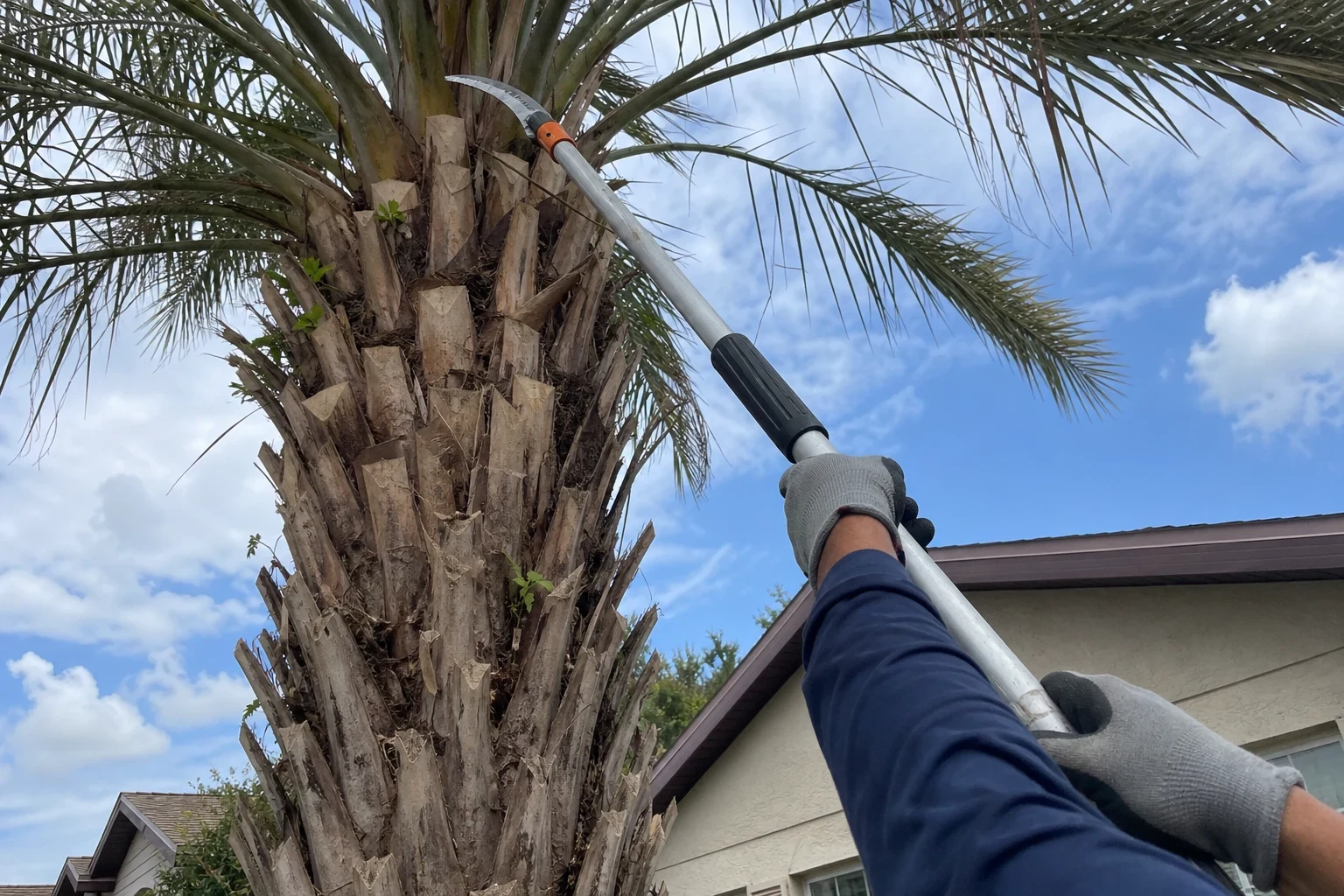
We trim dead fronds, seed pods and loose boots so your palms hold up when the summer storms roll in. When a palm is dying or leaning toward your home, we take it down in sections and haul it away. You get a straight answer on which one you need.
Cut what's dead, leave what's working
Palms are not like oaks. They grow from one bud at the top, and the green fronds feed that bud. Cut too many and the palm gets weak, thin at the crown and slow to recover. The tight "hurricane cut" you see on a lot of streets often does more harm than good.
So we trim dead and broken fronds, flower stalks and fruit clusters, and we leave the healthy green ones alone. The goal is a palm that drops less mess and has nothing heavy hanging when the wind picks up in summer.
Removal is the right call when a palm has a disease that can't be fixed, a cracked or bent trunk, or roots pushing up a driveway or pool deck. We'll tell you plainly which side of that line your palm is on.
What a palm visit covers
Dead and hanging fronds
We cut brown and drooping fronds close to the trunk without nicking it. Green fronds above level stay on the tree.
Seed pods and fruit stalks
Queen palms and date palms drop fruit that stains pavers, draws bugs and sprouts in your beds. Taking the clusters off before they ripen saves you weeks of raking.
Boot cleanup on cabbage palms
Old frond bases on sabal palms can be peeled off once they're loose. We don't hack into the trunk just to make it look smooth.
Clean tools between palms
Fusarium wilt and other palm diseases spread on dirty saw blades. We clean our cutting tools before moving to the next palm.
Full palm removal
When there isn't room to drop a palm, we take it down in pieces so your roof, fence and beds stay clear. The trunk is cut low to the ground.
Haul-off and raking
Fronds, fruit and trunk sections leave with us. We rake the beds and blow off the driveway and walks before we pack up.
Signs your palms need attention
- A brown skirt under the crown
- A thick ring of dead fronds catches wind and gives rats and roaches a place to live. It's time for a trim.
- Fruit clusters hanging heavy
- Big orange or yellow bunches mean a mess on the ground in a few weeks.
- Fronds touching the roof or pool cage
- Fronds that rub a roof or screen enclosure will scrape and tear it in the first strong wind.
- Shelf mushrooms at the base
- Hard conks near the soil line can point to Ganoderma butt rot. There is no cure, and the trunk can snap without warning, so removal is usually the safe answer.
- A thinning or tilting crown
- A trunk that pinches narrow at the top, a crown that leans, or a new center spear that pulls out easily all mean the palm is in trouble. Have it looked at before storm season starts.
How a palm job goes
- 1
Call and walkthrough
You call, and we set a time to walk your yard with you. We look at each palm, point out what's dead or sick, and then give you a free estimate.
- 2
Check the rules
If a palm needs to come out, we check whether a permit is needed for that tree at your address before we schedule. We tell you what we found and how it affects timing.
- 3
Work day
We set up, cover beds and plan where debris will land. Palms you're keeping are trimmed from a ladder, lift or rope, never with climbing spikes, because spike holes in a palm trunk don't heal.
- 4
Cleanup and a last look
We haul everything off, rake and blow, then walk the yard with you so you can see the work. If you want a stump gone, stump grinding can follow.
What sets the price
Every palm job is priced after we see the trees. Height and access move the number the most. You get a written estimate before any work starts, so nothing comes as a surprise. For bigger projects that pair removal with new plantings, we offer financing up to $100,000 on 2–12-year terms, no prepayment penalties.
- Height
- A short pygmy date palm takes minutes from the ground. A tall Washingtonia needs a lift or a climber and more time.
- How many palms and how much to cut
- One cabbage palm with a few dead fronds is a quick stop. A row of queen palms loaded with fruit stalks takes longer.
- Access and what's below
- Pool cages, roofs, power lines and fenced yards with narrow gates all slow the work and change how we bring equipment in.
- Removal and haul-off
- Palm trunks are heavy and wet, so taking one down and hauling it away costs more than a trim. Grinding the stump is priced as a separate choice.
Palm questions we hear
- How often should my palms be trimmed?
- Most palms here do fine with one or two trims a year. A late spring trim, before hurricane season starts in June, clears dead fronds and fruit ahead of the windy months. Heavy fruiting palms like queens may need a second visit in the fall.
- Should I get the hurricane cut?
- We advise against it. Stripping a palm down to a few fronds weakens it and can make the crown more likely to fail. Healthy green fronds help feed the palm and let it flex in the wind.
- My palm's lower fronds are yellow. Should you cut them?
- Not right away. Yellow older fronds often mean the palm is short on potassium and is pulling it out of those fronds. Cutting them early can make the shortage worse. We'll tell you what we see and when trimming makes sense.
- Can you take down a palm right next to my house?
- Yes. When there's no room to drop it, we lower it in sections and keep pieces away from the roof, gutters and windows. We plan the cuts during the walkthrough so you know how it will go.
- Do I need the stump ground after a palm comes out?
- Palm stumps don't sprout back like hardwood stumps, so you can leave one cut low. If you want the spot flat for sod or a new bed, our stump grinding service takes it below grade.
Get your palms ready before storm season
Give us a call and we'll set up a free walkthrough of your yard. We'll show you which palms need a trim, which should come out and which are fine as they are.