ServicesLawn Care
Lawn Care in Lake Mary
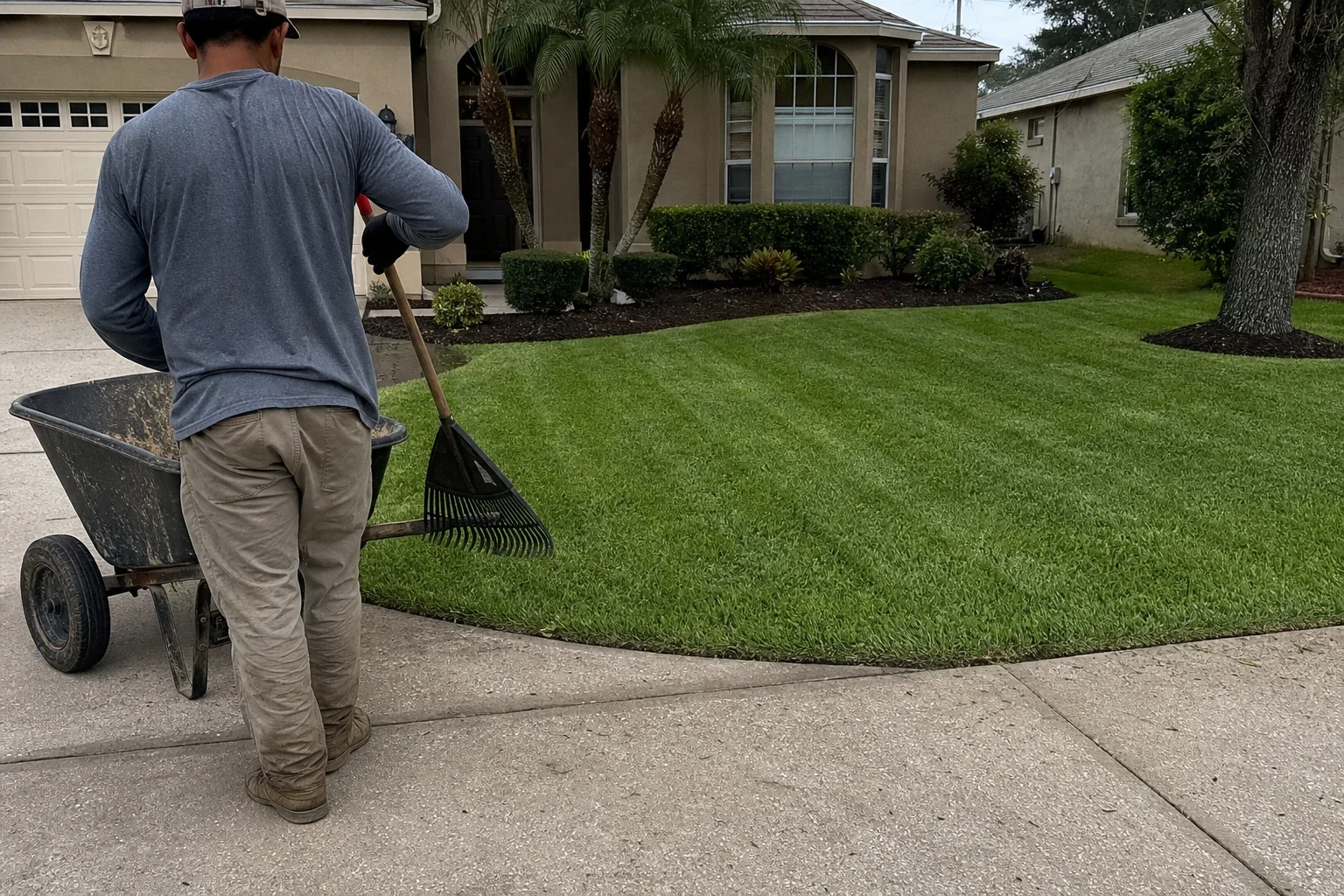
We mow, edge, feed and watch your lawn on a steady schedule, and we change what we do as the weather turns. Heavy summer rain, dry spring weeks and cool winter nights each need something different. You get thick grass and fewer problems that sneak up on you.
Lawn care that changes with the calendar
Most lawns here are St. Augustine, with some Zoysia and Bahia mixed in. Each one grows at its own pace and wants its own mowing height. St. Augustine, for example, does best cut tall, around three and a half to four inches, so the blades shade the soil and crowd out weeds.
The work is simple to describe. We cut, edge, blow off the hard surfaces and look the lawn over every visit. What sets a good season apart is timing. We feed before the growth push, not during a drought. We look for chinch bugs when it turns hot and dry, and for fungus when nights get cool and damp.
What a lawn care visit covers
Mowing at the right height
We set the deck for your grass type and the time of year. We never take off more than about a third of the blade at once, which keeps the grass from stressing and browning.
Edging and trimming
Clean lines along the driveway, walks and beds. We string trim around trees, fences and the AC unit so nothing gets missed.
Blow-off and cleanup
Clippings come off the driveway, walks and patio before we leave. Clippings on the lawn itself stay there, since they feed the soil.
Fertilizer on a schedule
We feed in spring and fall when the grass can use it. Florida rules limit what goes down during the summer rainy season, and we follow them.
Weed and pest checks
Every visit we look for the early signs: dollarweed in wet spots, yellow patches from chinch bugs, rings from fungus. We tell you what we see and what we suggest before treating anything.
Signs your lawn needs a steady hand
Dry, straw-colored patches
Patches that spread in hot weather and don't green up after rain are often chinch bugs, not thirst. They move fast in St. Augustine, so it pays to catch them early.
Weeds filling in thin spots
Dollarweed, crabgrass and sedge move in wherever the grass is weak. Usually that means it is cut too short or watered the wrong way.
Brown rings or circles
Rings that show up in fall or winter usually point to large patch fungus. Too much water and nitrogen at the wrong time make it worse.
Grass that gets ahead of you
In summer the lawn can grow faster than you can keep up. Letting it go long and then scalping it is one of the quickest ways to thin a yard.
How we start and what happens after
- 1
Free walkthrough
We walk the yard with you. We check the grass type, the bare spots, shade, drainage and how the sprinklers cover. Then we tell you plainly what we would do and what can wait.
- 2
A clear plan for the year
You get a written estimate that lists the visits, what each one covers and when feeding and treatments happen. No add-ons show up later that you did not agree to.
- 3
Regular visits
We come on a set schedule, more often in the growing season and less in winter. Gates get closed and the dog stays in, the way you ask.
- 4
Adjust as the weather turns
If it turns dry, we raise the mowing height. If a wet spell brings fungus, we tell you and talk through treatment. You hear from us when something changes.
What sets the price of lawn care
We price lawn care after we have seen the yard. Two lawns on the same street can take very different amounts of time. Your estimate shows what is included in each visit so you know what you pay for.
- Lawn size and layout
- More square footage takes more time. So do lots of beds, trees and tight corners that need hand trimming.
- How often we come
- Weekly visits in the summer growth season cost more over the year than a lighter winter schedule. We set the visit count with you.
- Feeding and treatments
- Mowing alone costs less than a plan that adds fertilizer, weed control and pest treatment. You choose what goes in.
- Starting condition
- A yard that has been let go for a while may need a first visit that takes longer. Sometimes a bare area needs new sod, which we price separately.
Lawn care questions we hear
Something not covered here? (407) 753-9381
How often will you mow?
Most yards need a cut every week from spring through early fall, when the grass grows fast. In the cooler months growth slows, and every other week is usually enough. We set the schedule at the walkthrough and change it if the weather calls for it.
Do you handle the sprinklers too?
Lawn care visits cover mowing, feeding and checks. If we spot a broken head or a zone that is drowning one spot and missing another, we will tell you. Repairs and timer changes fall under our irrigation service.
Why is my grass still brown when I water it every day?
Daily short watering keeps roots shallow and feeds fungus. Deep watering a couple of days a week, within local watering rules, usually works better. Brown patches that spread can also be chinch bugs, which water won't fix.
Will you bag the clippings?
Usually no. Clippings break down fast and return nutrients to the soil. We bag only when the grass got too long or there is disease we don't want to spread.
Can lawn care fix my bare spots?
Good care helps thin areas fill back in, since St. Augustine spreads on runners. Large bare spots, or areas where the grass died out, usually need new sod. We will tell you which one you have.
Get your lawn on a schedule that fits the season
We will walk your yard, look at the grass and the problem spots, and give you a plan and a price. The walkthrough and estimate are free.