ServicesLandscape Design
Landscape Design in Lake Mary
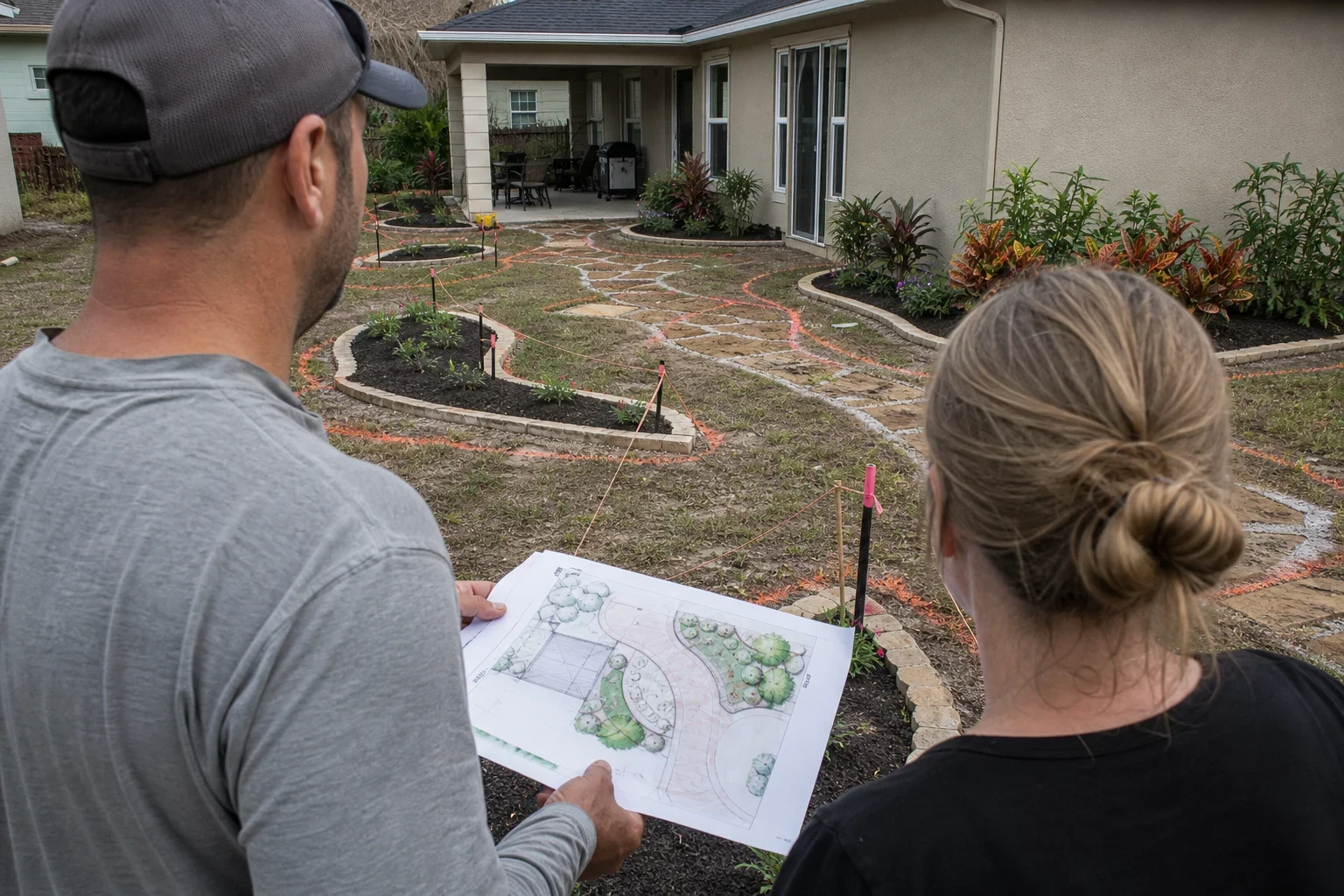
We walk your yard with you, find out how you use it, and draw a plan for beds, plants and paths that fit your sun, soil and water. Then we set the install for the stretch of the year when new plants take hold best.
A plan before anything goes in the ground
Landscape design is the step most people skip. They buy plants they like, put them where there is a gap, and two summers later half are dead or crowding the windows. A plan fixes that. It says what goes where, how big it will get, how it gets water, and what it needs from you each month.
We start with what your yard already has. Where the afternoon sun hits. Where water sits after a storm. Which spots stay dry no matter how much the sprinklers run. Sandy soil drains fast and holds little, so plant choice and bed prep matter more here than in most places.
Timing is part of the plan. Plants set in before the summer rains get steady water while they root. Plants set in late spring, with dry weeks ahead, need more help. We tell you when your project should go in and why.
What the design work covers
On-site walkthrough
We walk the whole yard with you, front and back. We note sun, shade, drainage, slopes, trees and anything you want kept. We ask how you use the space and how much upkeep you want.
Layout and plant plan
You get a drawing that shows bed lines, plant spots and any paths or patio areas. Each plant is chosen for its spot, its full size and how it handles heat, sandy soil and a light frost.
Water plan
New beds need water that reaches them. We mark where irrigation zones or drip lines should run so plants with different needs are not on the same schedule. Our irrigation service can handle that part.
Planting calendar
We break the job into phases if it makes sense, so big plantings land in the right season and you are not paying for everything at once.
Care notes
You get plain notes on watering, trimming and mulching for the first year, which is when most new plants live or die.
When a design makes sense for your yard
Plants keep dying in the same spot
That usually means the wrong plant for the light or the water there. Replacing it with the same thing will not change the result.
Shrubs are swallowing the house
Foundation plants that were cute at planting can reach the eaves and hold moisture against your walls. A redesign picks plants that stay the size you need.
Water pools or washes out mulch
Heavy summer storms show where a yard drains badly. A design can reshape beds and add plants that handle wet feet.
The yard does not fit how you live
Maybe you want a spot to sit, room for kids or less grass to mow. That calls for a new layout, not just new plants.
You just bought the home
A fresh plan is easier than fighting someone else's choices one bed at a time.
Big removals left gaps
After tree removal, stump grinding or clearing out bamboo, the open space needs a plan so weeds do not take it.
How a design job runs
- 1
Walk the yard together
We come out, look at everything and listen. This visit is free. We take photos and rough measurements so the plan matches your real yard.
- 2
Draw the plan
We lay out beds, plants and any hardscape on a drawing. You see where things go and how big they will get.
- 3
Go over it with you
We walk through the plan and the estimate line by line. You can change plants, cut a section or split the work into phases. Nothing starts until you say so.
- 4
Set the install date
We pick a window that suits the plants, often ahead of the rainy season or in the cooler fall months. Then our crew preps beds, plants, mulches and cleans up before we leave.
What sets the price of a design
A small front bed refresh and a full yard redo are very different jobs. The plan itself is one part of the cost. Most of the money goes into plants, materials and labor at install. We give you a written estimate so you can see each part.
- Size of the area
- More square feet means more beds, more plants and more soil prep. A front entry costs less than front and back together.
- Plant size and count
- Larger plants give a finished look sooner but cost more. Smaller ones cost less and grow to full size over a season or two.
- Removal and prep
- Old shrubs, sod, roots and weeds have to come out first. Poor sandy soil may need amending so new plants can hold water.
- Water and hardscape
- Adding irrigation zones, edging, a path or a patio adds cost. Some people do these in a later phase.
- Paying over time
- We offer financing up to $100,000 on 2–12-year terms, no prepayment penalties, if you would rather spread out a larger project.
Landscape design questions
Something not covered here? (407) 753-9381
Do I have to install the whole plan at once?
No. Many people do the front yard first and the back later. We can split the plan into phases and time each one to a good planting season. You still get one plan, so it all fits together in the end.
What is the best time of year to plant here?
Late spring into early summer works well for many plants because the rains are about to start and do much of the watering. Fall is good too, with cooler days and less stress. Planting during the dry spring weeks can work but needs closer watering.
Will you use plants that hold up to our weather?
Yes. We pick plants that handle long hot summers, sandy soil and the odd cold night in winter. We also avoid plants that need constant water unless you want them and the irrigation can support them.
My neighborhood has an HOA. Can you work with that?
Yes. If your HOA needs to approve changes, we give you the drawing and plant list so the board has what it needs for its review. We hold off on any work until the approval comes through.
Can you work around trees and plants I want to keep?
Of course. We mark what stays during the walkthrough and design around it. We protect roots and keep machines clear of those areas on install day.
Let's walk your yard and make a plan
We come out, look at what you have and talk through what you want. You get a free estimate and a clear idea of when the work should go in.