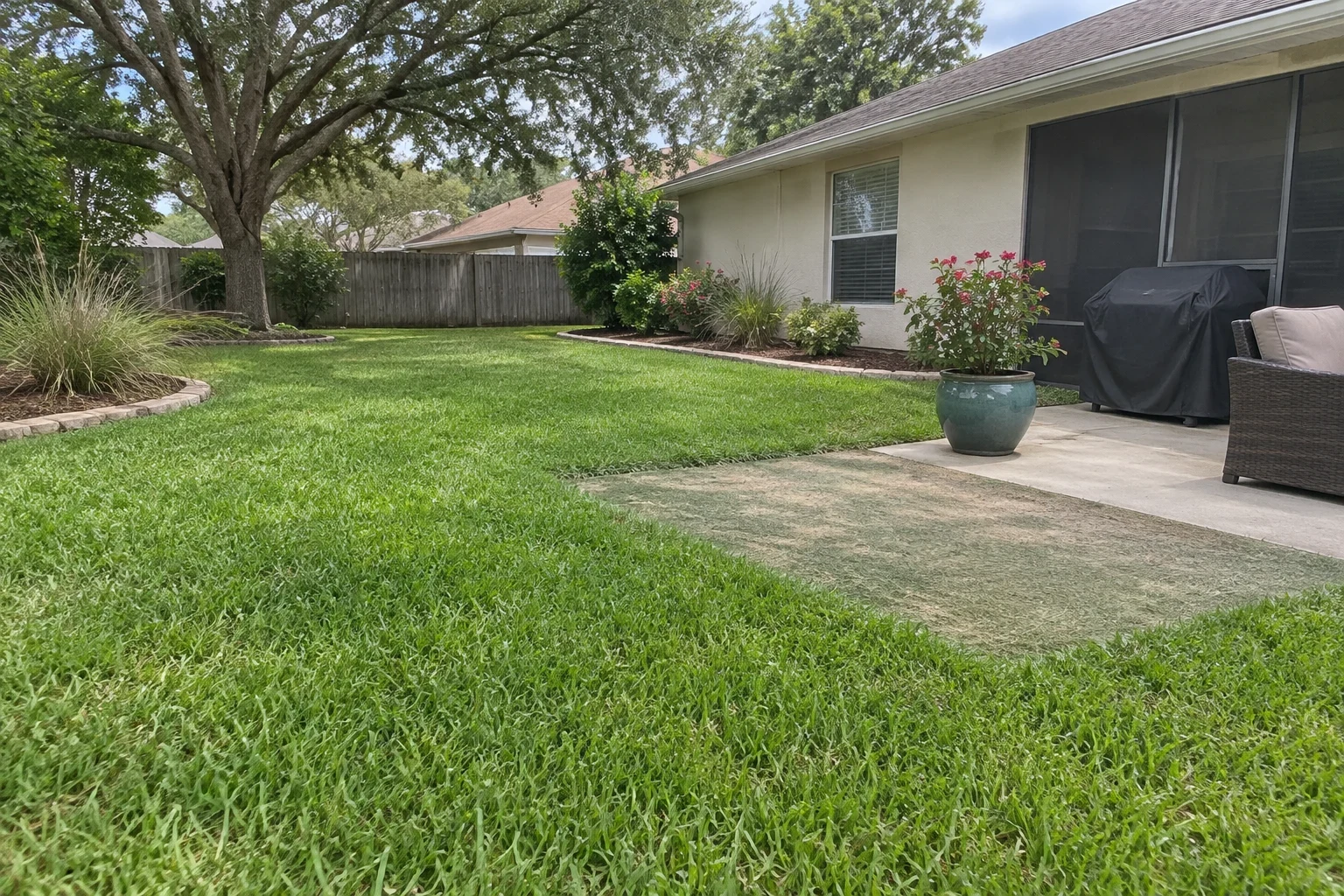
What Is the Downside of Artificial Turf in Lake Mary?
Fake grass looks easy on paper, but our summers test it in ways the brochures skip.
What is the downside of artificial turf?
The biggest downside of artificial turf here is heat. In full Florida sun it gets far hotter than real grass, too hot for bare feet or pets by midday. It also needs a well-built drainage base, regular rinsing and brushing, and it wears out and goes to a landfill. Questions about your yard? (407) 753-9381
How hot does artificial turf get in the Florida sun?
Hot enough to change how you use your yard. Turf is plastic, and plastic holds heat. On a clear summer afternoon it can feel like a parking lot, while real grass next to it stays cool because it releases water through its blades.
The infill makes it worse. Most turf is packed with sand or rubber crumbs to hold the blades up, and both soak up sun. Kids and dogs tend to stay off it from late morning until the sun drops.
There is one more heat problem people don't expect. Some energy-efficient windows reflect sunlight in a focused beam. When that beam lands on turf for a few hours, it can warp or melt the fibers in a strip.
Does artificial turf drain well in heavy rain?
It can, but only if the base under it is built right. Turf sits on a layer of crushed rock or compacted base material, and the water has to pass through the backing and then through that base. Our summer storms can drop a lot of rain in an hour. If the base is thin or the ground under it is slow to drain, water sits on top and the edges can lift.
Standing water also carries fine debris into the backing over time. That slows drainage further. A real lawn on sandy soil, the kind most yards around here have, takes rain the way it always has.
- Puddles that linger after an afternoon storm
- Seams and edges lifting where water collects
- Infill washing toward low spots and drains
- Algae or slick spots in shady, damp corners
Is artificial turf really maintenance-free?
No. It is lower maintenance than mowing every week in summer, but it still needs work. Oak leaves, pine needles and palm debris land on it and have to be blown or raked off. If you leave them, they break down into a thin layer of soil, and weeds will root right in it.
Pets add a bigger chore. Urine does not soak away like it does in a lawn. It sits in the backing and infill, and in our heat and humidity the smell builds fast. Owners with dogs usually end up rinsing and treating the turf on a regular schedule.
Then there is brushing. Foot traffic flattens the blades, and they need to be brushed back up so the turf doesn't look matted. Edges near beds and fences need checking too, since weeds creep in where the turf meets soil.
How long does artificial turf last, and what happens after?
Every turf product wears out. Strong sun breaks down the fibers, so color fades and the blades get brittle over the years. Heavy use speeds that up in paths and play areas.
When it is done, it has to be torn out, and most of it goes to a landfill. It does not feed the soil, cool the yard or give birds and insects anything to work with. A grass lawn that gets tired can be patched, overseeded in spots or resodded without hauling away a whole yard of plastic.
Also check your HOA rules before you plan anything. Many communities in the area have rules about what can go in a front yard, and they are worth reading first.
When is real sod the better choice?
For most yards we walk, real sod is the better fit. St. Augustine handles our heat and takes some shade. Zoysia makes a dense lawn that holds up to foot traffic. Bahia is tough and does well in open, sunny areas with less water. Each one stays cooler underfoot than turf and drains like ground should.
Timing matters with sod. Late spring into the start of the rainy season is a good window here, because steady rain helps new roots take hold. Watering limits from the St. Johns River Water Management District still apply, so a good irrigation setup helps new sod get through its first weeks.
If you want less upkeep, there are other ways to get it. Smaller lawn areas, wider mulch beds and a paver patio in high-traffic spots all cut mowing time without covering the yard in plastic. We look at sun, shade, slope and how you use the space before we suggest anything.
More questions about turf and grass
Is artificial turf safe for dogs?
It is not toxic in normal use, but it gets very hot in summer sun and holds urine smell if it is not rinsed often. Many dog owners find real grass in the sunny areas and mulch or pavers in the shade works better.
Does artificial turf work in shady yards?
It will not die in shade, but shady spots stay damp longer after rain. That can lead to algae, slick spots and odor. Shade-tolerant grass or planted beds are often a better answer under big oaks.
Can you put sod where turf used to be?
Usually yes. The turf, infill and base material have to come out first, then the soil gets loosened and graded before new sod goes down. We look at the drainage while we are there.
What grass needs the least water here?
Bahia is the most drought-tolerant of the common lawn grasses in our area. It is not as soft or dense as St. Augustine or Zoysia, so it fits best in larger, sunny spaces.
Not sure what belongs in your yard?
Give us a call and we will set up a free walkthrough of your property. We look at sun, shade and drainage, talk through sod and low-upkeep options, and give you a free estimate before the next season starts.