How Quickly Does Sod Grow in Lake Mary?
New sod looks finished the day it goes down, but the part that matters happens under the surface over the next few weeks.
How quickly does sod grow?
In warm months, new sod starts putting down short roots in about 10 to 14 days and is usually well anchored in four to six weeks. In the cooler winter months the same process runs slower. Grass type, soil prep and how you water matter as much as the calendar. Questions about your yard? (407) 753-9381
What happens in the first two weeks
Sod comes off the farm with roots cut short. For the first few days it lives on the moisture in the pad and the soil right under it. That is why the first week of watering matters more than any other.
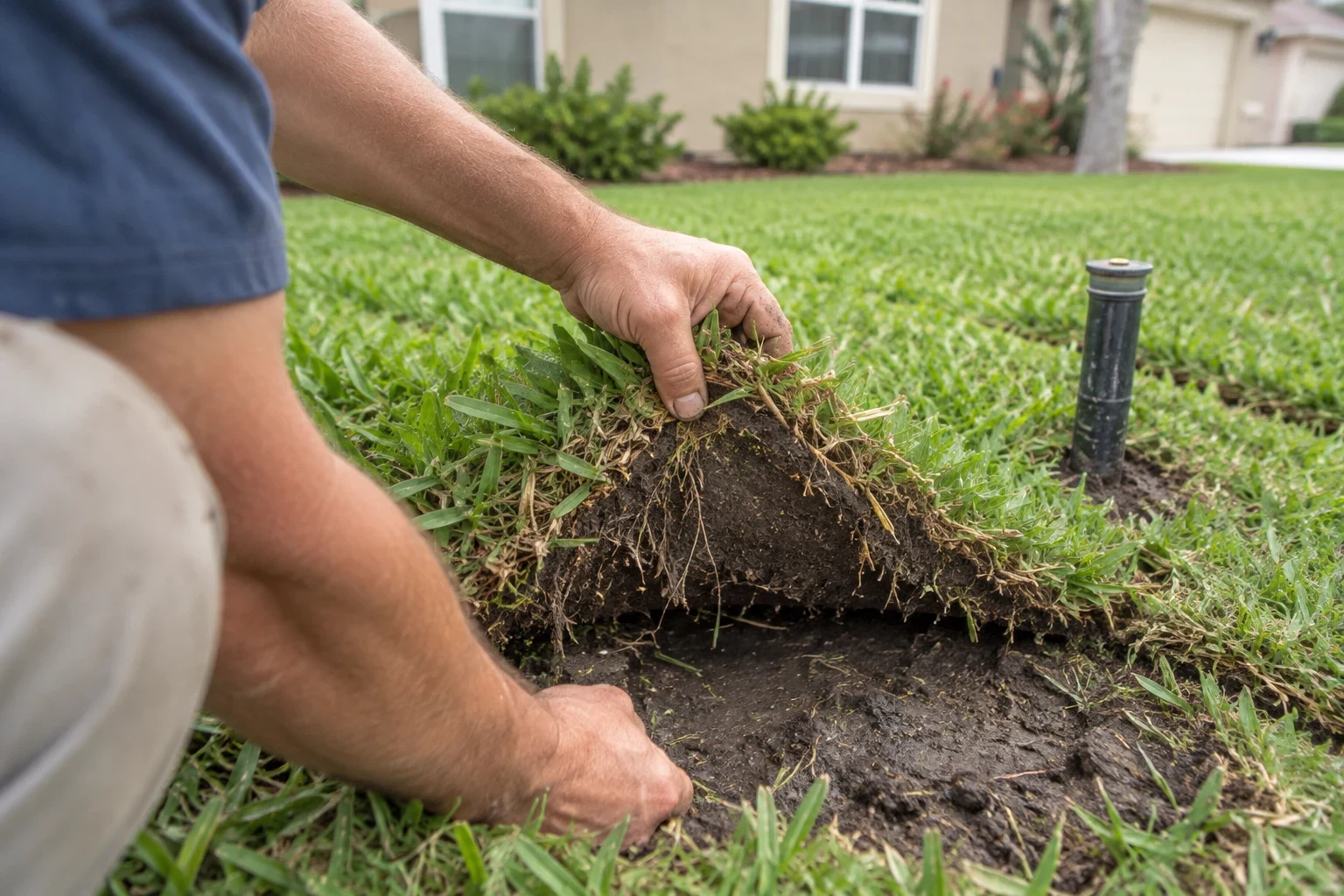
Around day seven to ten, thin white roots start to push into the soil below. By the end of week two, in warm weather, you should feel the pieces holding on when you tug a corner. If a piece lifts like a loose rug, the roots have not taken yet and the soil under it is often too dry or too hard.
Growth on top is a different story. The blades will keep growing and greening in that time, sometimes fast enough to need a light mow by week three. Green on top does not mean rooted underneath.
- Days 1 to 7: keep the pad and the top inch of soil moist
- Days 7 to 14: short new roots begin reaching into the soil
- Weeks 3 to 4: pieces hold firm, first light mow is usually fine
- Weeks 4 to 6: roots are deep enough for normal watering and use
How the season changes the timeline
Warm-season grasses root fastest when the soil is warm, roughly late spring through early fall. Here in Central Florida that is a long stretch, and summer rain helps keep new sod wet. The tradeoff is heat. A dry, hot week in May can scorch new sod in an afternoon if the watering slips.
From December into February, growth slows down. Sod laid then still roots, but it can take noticeably longer to anchor, and it may not look fully green until spring warms the soil. That is not a reason to skip winter installs. It just means you plan for a slower start and lighter watering, since the grass uses less.
Our advice is to time the job to what you need. If you want a lawn ready for summer use, spring is the sweet spot. If you are fixing bare spots after fall work, a late fall install gets roots started before the cool months.
Does the type of grass matter
Yes. Each grass roots and spreads at its own pace, and that changes how soon your lawn feels finished.
St. Augustine, including Floratam, is the most common lawn grass around here. It roots quickly in warm weather and fills gaps by sending runners across the surface. Zoysia is denser and slower, so it often needs a bit more time before it handles heavy use. Bahia is tough once established but can look thin for a while and roots on its own schedule. Bermuda grows fast in full sun but does not like shade.
- St. Augustine: quick to root in warm months, likes regular water
- Zoysia: slower to settle, thick and soft once established
- Bahia: drought tolerant later, slower to look full early
- Bermuda: fast in full sun, struggles under trees
How to water new sod so it roots faster
Water within an hour of the sod going down, then keep it damp, not soaked. Short waterings once or twice a day work better in the first week than one long soak. Walk out and lift a corner. The soil under it should feel moist, like a wrung-out sponge.
After the second week, start stretching the time between waterings and run each cycle a little longer. This pushes roots to chase water down into the soil instead of staying near the surface. By week four or five, most lawns can move to a normal schedule.
Check the current watering rules from the water management district before you set your timer. New sod usually gets an establishment allowance, but the details can change, so it is worth confirming. If your system has gaps in coverage, fix that first. Our irrigation work often starts with a quick zone check before any sod goes down, because a dry corner will show up as dead sod within a week.
When you can mow and walk on new sod
Stay off it as much as you can for the first two weeks. Foot traffic on soft, wet sod leaves dents and can tear new roots loose.
Mow once the pieces hold firm when you tug them, usually around week three in warm weather. Set the mower high and only take off the top third of the blade. Skip watering the day before so the ground is firm under the wheels.
Kids and pets can start using the lawn normally after about four to six weeks in warm months. In winter, give it longer and go by the tug test, not the calendar.
More questions about new sod
When can I fertilize new sod?
Wait until it is rooted, usually around 30 to 60 days. Fertilizer on unrooted sod can burn it and pushes top growth before the roots are ready.
Why are the seams turning brown?
Edges dry out first. Brown seams usually mean the pieces were not pressed tight or the water is not reaching them, so water the seams by hand for a few days.
Does soil prep change how fast sod roots?
A lot. Old roots and weeds removed, the ground leveled and loosened, and sod laid tight on firm soil will root faster than sod dropped on hard, uneven ground.
Can sod go down in the middle of summer?
Yes, and it roots fast in the heat. It just needs steady water, since one missed day can stress it badly.
Planning new sod this season?
We come out, look at your soil, sun and sprinkler coverage, and tell you which grass fits and when to lay it. The walkthrough and estimate are free.